Open Mon - Fri 8:00 AM to 5:00 PM
The Lampliter designs and installs custom low-voltage landscape lighting systems for homes throughout Indianapolis and the surrounding communities. From architectural uplighting and tree-mounted moonlighting to pathway, patio, and hardscape lighting, every fixture is carefully selected and positioned for a specific purpose. Using durable brass and copper fixtures, properly sized transformers, and weather-resistant connections, we create reliable outdoor lighting systems that complement your property and perform through Indiana’s changing seasons.
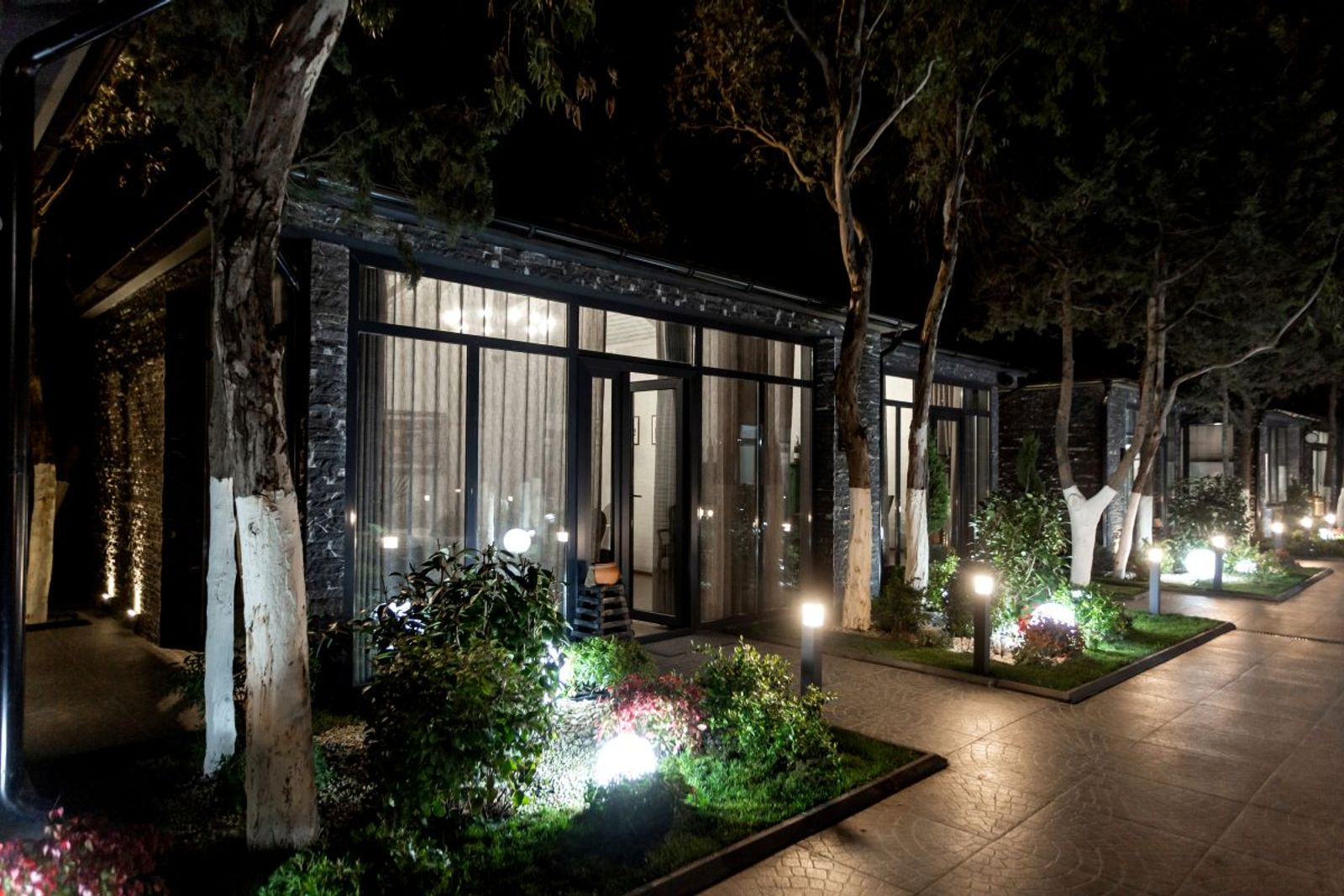
Landscape lighting is a low voltage outdoor system of fixtures and buried cable, run from a transformer, that lights your home's architecture, trees and walkways after dark. The Lampliter designs and installs these systems across the Indianapolis area. Cost depends on property size, fixture count and cable run length, so every home is quoted individually.
A designed system is more than a box of fixtures from a big box store. It starts with a low voltage transformer sized to the actual load, runs on direct burial cable rated for the ground it sits in, and ends at brass or copper fixtures placed where they do real work. Every fixture has a job. One washes a stone facade. Another sits high in a maple and drops light down through the branches. A third tucks behind a boxwood so you see the light and never the source.
We spec brass and copper for a reason. Indiana ground moves all winter with freeze and thaw, and that movement is hard on thin housings and lazy connections. Aluminum pits. Plastic goes brittle by the third season. Brass ages to a patina and keeps working.
Beam angle and output get chosen fixture by fixture. A wide flood suits a broad brick elevation. A tight spot suits a single columnar oak. Getting that choice wrong is the most common reason a system reads harsh or blotchy.
Most projects start with the front of the house. Plenty of them keep going into the back yard. Light built into retaining walls, steps and seat walls is hardscape lighting. Rail and stair fixtures on a deck or under a covered porch fall under deck and patio lighting. Ponds and fountains take sealed submersible fixtures, which is water lighting. If safety is driving the project more than appearance, security lighting handles motion sensing and higher output coverage at entries and side yards. Since we are already running low voltage line through the beds, it is the cheapest moment to add outdoor audio systems.
We start at your house in daylight and look at what is already there. Canopy, grade changes, hardscape, where the driveway curves, which windows face which view. In the older sections of Carmel and in Meridian Hills, the mature tree canopy is usually the biggest design asset on the lot, and it drives the whole approach. Newer neighborhoods in Westfield and Noblesville tend to lead with architecture instead, because the trees have not filled in yet.
Then we come back after dark and set temporary fixtures on the ground. You stand at the curb, then at the front door, and you look. Move one light two feet and the shadow across the brick changes completely. This is the step most homeowners skip, and it is the step that decides whether you still like the system in ten years.
You get a layout showing fixture type, placement, wire runs and transformer location, with a written quote priced against that layout. No vague fixture counts, no surprises mid install.
A fixture at grade aimed up a trunk, a column or a chimney. This is the workhorse of most designs. Wide beams for broad surfaces, tight beams for a single vertical feature. Used on architectural details, it overlaps with what we call accent lighting.
Fixtures mounted high in a tree and aimed down through the limbs. The branches break the beam and scatter a dappled pattern across the lawn and driveway that reads like real moonlight. It needs genuine canopy to work, which is why it carries so many designs on established lots in Meridian Hills and older Carmel.
A fixture set close to a wall and aimed nearly straight up the face of it. The light skims the surface at a shallow angle, and every joint and every bit of texture throws its own small shadow. It looks excellent on stone, brick and cedar. It looks flat on smooth vinyl siding, so we do not use it there.
Light placed behind an object and aimed at the wall or fence beyond it. The object goes dark and its outline reads sharp against the lit surface behind. This works beautifully on ornamental grasses, Japanese maples, statuary and iron gates.
Low fixtures spaced along a walk, throwing overlapping pools down onto the surface. Spacing matters far more than fixture count. Too tight and you have built a runway. Too far apart and you have left dark gaps in the exact places people misstep. If walkway safety is the main concern on your property, our path lighting page covers that service on its own.
Line voltage outdoor lighting means 120 volts sitting in trenches through a yard where people dig, plant and let kids run. Low voltage steps that down at the transformer, so the cable buried in your beds carries a small fraction of it. It is safer to work around. It can be adjusted or extended later without an electrician re-trenching the property. Voltage drop across long runs stays manageable, provided the cable is sized correctly.
That last point is where a lot of systems quietly fail. Run 200 feet of undersized wire and the fixtures at the far end come in dim and yellow while the ones near the transformer glare. We calculate load per run and size cable to it, and we use hub and loop wiring rather than daisy chaining everything off a single line.
Connections get the same attention. Buried splices that were never properly waterproofed are the single most common failure we find on other companies' systems, and the freeze and thaw cycle here finds every one of them eventually.
The transformer is the heart of the system. We size it with headroom so you can add fixtures in two years without replacing the unit, and we mount it where it stays accessible but out of view.
Control is where you notice the difference day to day. An astronomic timer tracks actual sunset for this latitude and moves itself through the year. That matters in Indiana. Sunsets slide earlier fast from August onward, and a basic clock timer means you are out resetting the schedule every few weeks all fall. An astronomic timer just follows the sun. We can also put the system on app control with dimming and zones, so the front elevation runs at full output through the evening and steps down late at night.
Most residential systems go in over one to two days.
We locate utilities first, then mark the layout from the approved design. Cable goes into a narrow slit cut with a bed edger or small trencher and gets closed back over, so the turf recovers quickly. Fixtures are set, wired and backfilled. The transformer gets mounted and connected.
Then we come back that night. Fixtures positioned in daylight are always slightly off, so final aiming, glare shielding and dimming all happen after dark with you standing there. We walk the property with you, move anything you want moved, and show you the transformer, the timer and how to change the schedule yourself.
Every installation carries our workmanship warranty alongside the manufacturer coverage on the fixtures and transformer. Details are on our warranty page.
An outdoor system lives in the weather. Soil settles and fixtures shift. Shrubs grow into beams. Lenses cloud and connections eventually need attention. That work falls under landscape lighting maintenance, and we take it on for systems we did not install. If you inherited a system with the house, or your original installer has gone quiet, we will pick it up.
We also run lighting programs for HOAs and neighborhood associations across the north side.
Our shop sits on Valparaiso Court on the northwest side of Indianapolis, and most of our work stays within a short drive of it. Carmel and Zionsville are our two busiest markets, with a lot of mature canopy work in the older parts of both. We are in Westfield and Noblesville constantly as newer neighborhoods fill in and homeowners move past the builder grade fixtures the house came with. Fishers rounds out the east side of that range. Meridian Hills is a favorite, because the lots are deep and the trees are old enough that downlighting carries most of the design. We have been lighting homes here since 2018 and have earned more than 200 five-star Google reviews doing it.
Call The Lampliter at (317) 827-0250 or request a free quote online. We answer the phone Monday through Friday, 8am to 5pm, and we schedule night demos by appointment so you can see the design on your own property before you commit to it.
There is no flat price. Cost tracks fixture count, property size, cable run length, fixture material, and whether the design calls for tree mounted downlighting, which takes more labor. A front elevation package is a different scope than a full property. We walk the site, price the actual design, and give you a written quote.
Yes. We service and expand systems installed by other companies, including ones whose original installer is no longer around. We check transformer capacity and existing wire sizing first, because adding fixtures to an undersized run will dim the whole line. If the bones are sound, we build on them rather than starting over.
This page covers design and new installation, meaning the layout, fixtures, wire and transformer for a system you do not have yet. Maintenance covers an existing system: re-aiming fixtures, replacing failed lamps, repairing buried splices, and seasonal adjustments as plantings grow. Many customers start with an install and move onto a maintenance plan afterward.
Cable is installed in a narrow slit cut with a bed edger or small trencher, then closed back over, so disturbance is limited to a thin line that fills in within a few weeks of normal growth. We work around irrigation and existing beds, and we locate utilities before any blade goes in the ground.
Most residential systems are installed in one to two days. Aiming happens after dark, on site, with you present. Fixtures positioned in daylight almost never land correctly, so final aiming, shielding and dimming are done at night when you can see what the system actually does.
There is no flat price. Cost tracks fixture count, property size, cable run length, fixture material, and whether the design calls for tree mounted downlighting, which takes more labor. A front elevation package is a different scope than a full property. We walk the site, price the actual design, and give you a written quote.
Yes. We service and expand systems installed by other companies, including ones whose original installer is no longer around. We check transformer capacity and existing wire sizing first, because adding fixtures to an undersized run will dim the whole line. If the bones are sound, we build on them rather than starting over.
This page covers design and new installation, meaning the layout, fixtures, wire and transformer for a system you do not have yet. Maintenance covers an existing system: re-aiming fixtures, replacing failed lamps, repairing buried splices, and seasonal adjustments as plantings grow. Many customers start with an install and move onto a maintenance plan afterward.
Cable is installed in a narrow slit cut with a bed edger or small trencher, then closed back over, so disturbance is limited to a thin line that fills in within a few weeks of normal growth. We work around irrigation and existing beds, and we locate utilities before any blade goes in the ground.
Most residential systems are installed in one to two days. Aiming happens after dark, on site, with you present. Fixtures positioned in daylight almost never land correctly, so final aiming, shielding and dimming are done at night when you can see what the system actually does.